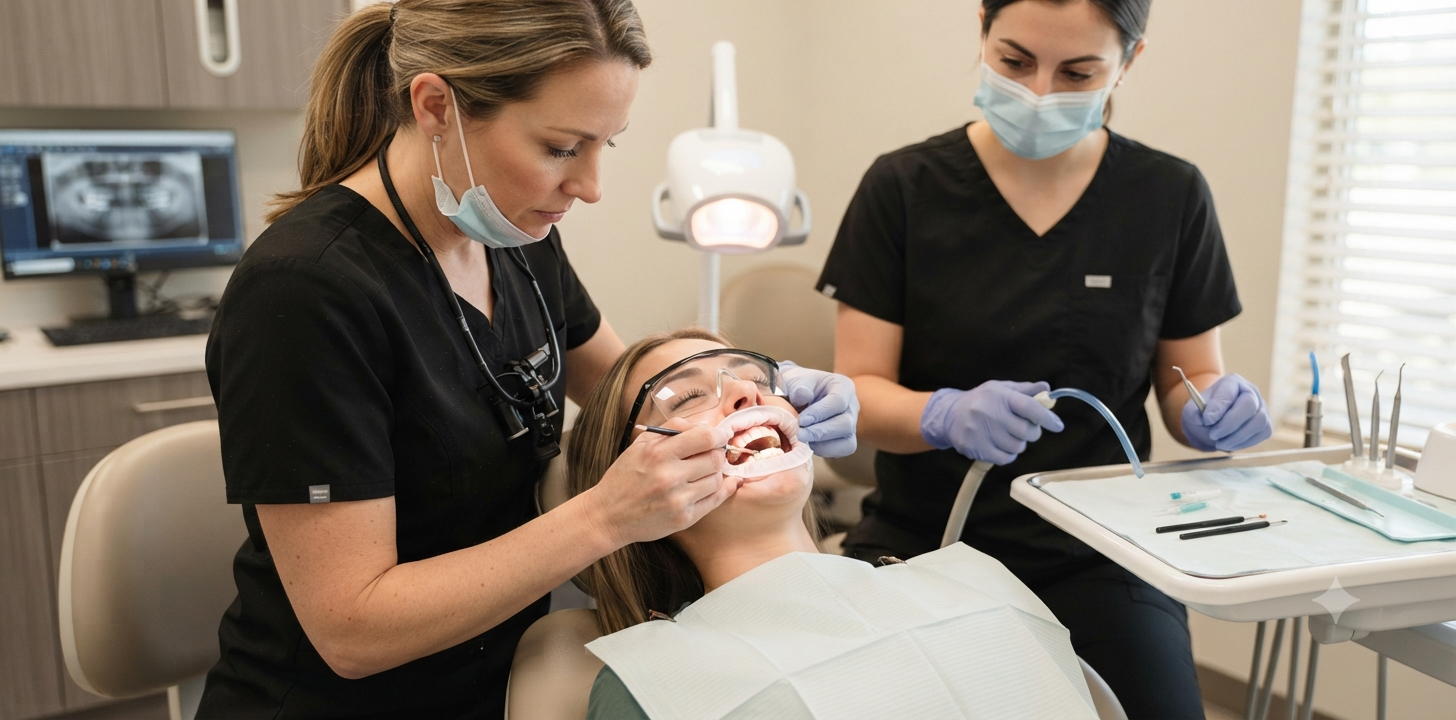
Professional teeth whitening can noticeably brighten your smile, but some patients may experience temporary tooth sensitivity during or after treatment.
The good news is that sensitivity doesn’t necessarily mean you have to choose between a brighter smile and comfort. Dentists can take several steps before, during, and after professional whitening to help minimize sensitivity and make the experience more comfortable.
Why Can Teeth Feel Sensitive During Whitening?
Professional whitening treatments use bleaching agents that work beneath the surface of the teeth to break down certain stains.
During this process, the whitening ingredients can temporarily affect the nerves inside the teeth, which may cause a short-term sensitivity to things such as cold air, water, or certain foods and drinks.
Sensitivity varies from person to person. Some patients experience little to no discomfort, while others may be more sensitive to whitening treatments.
How Does Your Dentist Check for Sensitivity Risk?
Before professional whitening begins, your dentist may examine your teeth and gums to identify factors that could make sensitivity more likely.
They may look for:
- Tooth decay
- Cracked or damaged teeth
- Worn enamel
- Gum recession
- Exposed tooth roots
- Existing tooth sensitivity
- Gum irritation
Addressing dental problems before whitening can help make the treatment safer and more comfortable.
Using the Right Whitening Approach
Not every patient needs the same whitening treatment.
Your dentist can consider your current tooth shade, desired results, oral health, and sensitivity history when determining an appropriate whitening approach.
The concentration of the whitening agent and treatment time may also be adjusted depending on your individual needs.
A professional approach allows your dentist to balance whitening results with your comfort.
Protecting the Gums During Whitening
Whitening products are intended for the teeth, not the surrounding gum tissue.
During professional treatment, your dentist can take precautions to help protect your gums from unnecessary exposure to the whitening material.
Proper isolation and careful application can reduce the chance of gum irritation during treatment.
Desensitizing Treatments
For patients who are more prone to sensitivity, a dentist may recommend or apply a desensitizing product before or after whitening.
Certain professional desensitizing treatments can help reduce the sensitivity associated with whitening by addressing the pathways involved in tooth sensitivity.
Your dentist can determine whether a desensitizing treatment is appropriate based on your individual situation.
Adjusting the Treatment When Needed
If you begin experiencing discomfort during whitening, your dentist can assess the situation and modify the treatment if necessary.
Depending on the type of whitening being performed, this may involve adjusting treatment time, changing the whitening approach, or taking other steps to improve comfort.
Professional whitening provides the advantage of having a dental professional monitor the process rather than relying entirely on trial and error at home.
What Happens After Whitening?
Some patients may experience temporary sensitivity for a short period after treatment.
Your dentist may recommend avoiding very cold or very hot foods and drinks immediately after whitening if your teeth feel sensitive.
Using products recommended by your dentist, including toothpaste designed for sensitive teeth when appropriate, may also help manage temporary discomfort.
Does Everyone Experience Whitening Sensitivity?
No, sensitivity is one of the possible side effects of teeth whitening, but not everyone experiences it.
Your risk may depend on factors such as your existing sensitivity, enamel condition, gum recession, whitening method, and the concentration and duration of the treatment.
That’s why a professional evaluation can be helpful before whitening.
Can Cavities or Gum Problems Make Whitening Uncomfortable?
Yes. Existing dental problems can contribute to sensitivity.
If you have untreated cavities, cracked teeth, significant enamel wear, or exposed tooth roots, whitening may cause more discomfort.
For this reason, your dentist may recommend addressing these concerns before proceeding with cosmetic whitening.
How Can You Help Reduce Sensitivity at Home?
Following your dentist’s aftercare instructions can help keep your teeth comfortable following treatment.
Depending on your situation, your dentist may recommend:
- Using a toothpaste for sensitive teeth
- Avoiding extremely hot or cold foods temporarily
- Limiting acidic foods and drinks
- Maintaining gentle but thorough oral hygiene
- Following the recommended whitening schedule
Avoid overusing whitening products in an attempt to achieve faster results, as this can increase the likelihood of sensitivity and irritation.
When Should You Talk to Your Dentist?
Mild, temporary sensitivity can occur after professional whitening. However, significant, persistent, or unusual tooth pain should not simply be assumed to be a normal part of whitening.
If sensitivity continues or becomes severe, contact your dentist so they can determine the cause and recommend appropriate care.
A Brighter Smile Doesn’t Have to Mean an Uncomfortable Experience
Professional teeth whitening can be a safe and effective way to improve the appearance of your smile when performed appropriately.
By evaluating your oral health, choosing the right whitening approach, protecting your gums, and using sensitivity-management techniques when needed, your dentist can help make treatment more comfortable.
If you’re considering professional teeth whitening, a dental consultation can help determine whether whitening is right for you and how to approach treatment based on your smile and oral health.
Geo Dental can help you explore your whitening options and develop a treatment approach designed around your needs.
Schedule a consultation to learn more about professional teeth whitening and take the next step toward a brighter smile.