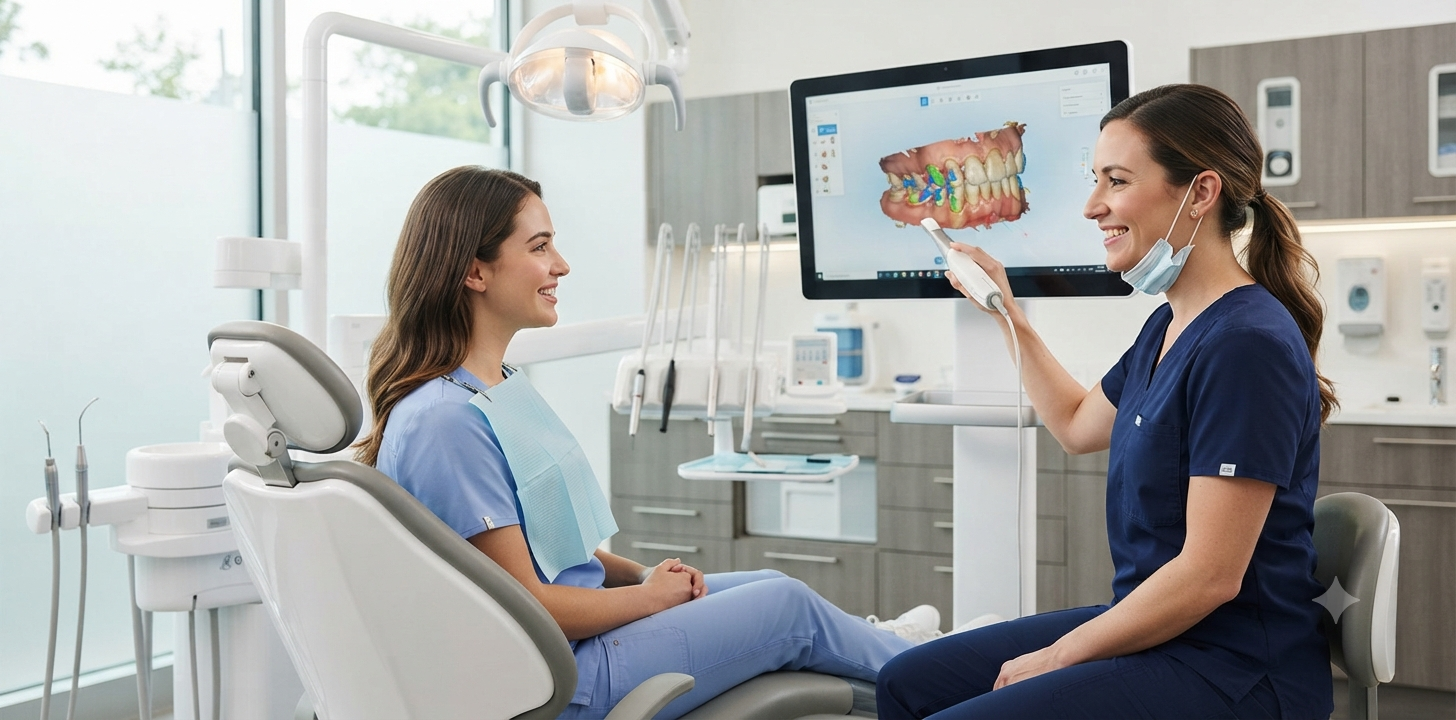
A visit to the dentist is no longer limited to traditional examinations and conventional treatment methods. Advances in dental technology have introduced digital tools that can help dentists evaluate oral health, plan treatment, and communicate findings with patients more effectively.
Digital dentistry is changing the patient experience by making certain parts of the dental process more visual, precise, and streamlined. From digital imaging to advanced treatment planning, these technologies can help dental professionals better understand a patient’s oral health while making it easier for patients to understand their treatment options.
At Geo Dental, modern dental technology can be an important part of providing personalized care for patients in San Antonio.
What Is Digital Dentistry?
Digital dentistry refers to the use of digital technologies and computer-assisted tools throughout different stages of dental care. These technologies can support diagnosis, treatment planning, patient education, and the creation of certain dental restorations or appliances.
Instead of relying only on traditional methods, dentists can use digital information to gain a more detailed understanding of a patient’s teeth, gums, and surrounding structures.
The technology used depends on the patient’s needs and the type of treatment being considered.
Digital X-Rays for a More Efficient Examination
Digital X-rays are one of the most common technologies used in modern dental practices. They provide images of areas that cannot be fully evaluated during a visual examination.
These images can help dentists identify concerns such as cavities, changes around tooth roots, bone-related issues, and other conditions that may not be visible from the outside of the teeth.
Digital imaging can also make it easier for the dental team to store, access, and share images as part of a patient’s dental records.
For patients, seeing their dental images on a screen can also make conversations about their oral health more visual and easier to understand.
CBCT 3D Imaging Provides a More Detailed View
For certain treatments, two-dimensional images may not provide enough information. Cone Beam Computed Tomography, or CBCT, can create three-dimensional images of dental and facial structures.
CBCT imaging can help dentists evaluate teeth, bone, jaw structures, and other areas from different angles. This can be particularly useful when detailed information is needed for treatment planning.
Not every patient needs a CBCT scan. Your dentist will determine whether 3D imaging is appropriate based on your individual treatment needs.
When it is recommended, the additional information can help the dental team develop a more informed treatment plan.
Intraoral Cameras Bring Your Smile to the Screen
An intraoral camera is a small device that allows the dentist to capture detailed images inside the mouth.
These images can be displayed on a screen, allowing patients to see areas of their teeth and gums more clearly. Instead of simply being told that a particular area needs attention, patients may be able to see what their dentist is seeing.
This can make conversations about oral health more interactive and help patients better understand why a specific treatment may be recommended.
Digital Scanning Can Replace Some Traditional Impressions
Traditional dental impressions can be uncomfortable for some patients. Digital intraoral scanners offer another approach for capturing detailed information about the teeth.
A digital scanner uses a handheld device to capture images of the teeth and create a digital representation of the patient’s mouth.
Depending on the treatment, digital scans may be used for planning and designing certain dental restorations or orthodontic treatments.
For patients, the scanning process can be more comfortable and convenient than traditional impression materials in situations where digital scanning is appropriate.
Technology Can Improve Treatment Planning
One of the major benefits of digital dentistry is the ability to collect and combine detailed information.
Digital images, scans, and other records can help dentists evaluate a patient’s needs before developing a treatment plan. This can be particularly useful for treatments where accurate measurements and detailed visualization are important.
Digital technology does not replace the dentist’s clinical judgment. Instead, it provides additional information that can support the evaluation and planning process.
Digital Dentistry Can Make Communication Easier
Dental terminology can sometimes be difficult for patients to understand. Digital technology can make explanations more visual.
For example, an intraoral image can help show a patient an area of concern. A digital scan can provide a clearer representation of the teeth. A 3D image can help illustrate structures that cannot be seen during a routine visual examination.
Being able to see what the dentist is discussing can help patients ask more informed questions and participate more actively in conversations about their care.
Digital Technology and Clear Aligners
Digital scanning and imaging can also play a role in orthodontic treatment planning.
For patients considering clear aligners, digital scans can provide detailed information about the current position of the teeth. These digital records can be used as part of the treatment-planning process.
Clear aligners are designed to gradually move teeth toward planned positions. Your dentist or orthodontic provider can determine whether clear aligners are appropriate based on your bite, alignment, oral health, and treatment goals.
Digital Dentistry Can Support More Personalized Care
Every patient’s smile is different. Digital technology can provide detailed information that helps dentists understand the specific characteristics of an individual’s teeth and supporting structures.
This can support a more personalized approach to treatment planning rather than relying on a one-size-fits-all process.
Technology is a tool that works alongside the dentist’s experience, clinical examination, and understanding of the patient’s goals.
What Does This Mean for Patients?
The biggest change digital dentistry brings is not simply the technology itself. It is how that technology can influence the overall patient experience.
Digital tools can help make certain examinations more efficient, provide clearer images, support treatment planning, and make dental findings easier to explain.
For patients, this can mean a more informed experience where they can better understand what is happening with their oral health and why a particular treatment may be recommended.
Modern Technology With Patient-Focused Care
Digital dentistry continues to evolve, giving dental professionals new ways to evaluate oral health and plan treatment. Technologies such as CBCT 3D imaging, digital X-rays, intraoral cameras, and intraoral scanners can each serve different purposes in modern dental care.
At Geo Dental, digital technology is part of a modern approach to dental care, helping the team evaluate patients’ needs and explain treatment options more clearly. Whether you are considering clear aligners, dental implants, or routine dental care, schedule a consultation to learn how modern dental technology may fit into your personalized treatment plan.