Visiting the dentist is an important part of maintaining good oral health, but for some adults, even scheduling a dental appointment can feel stressful. Fear of pain, dental instruments, injections or previous uncomfortable experiences can make people anxious about receiving dental treatment.
Dental anxiety is more common than many people realise. It can cause individuals to postpone routine checkups, avoid necessary procedures or delay treatment until dental problems become more serious.
Fortunately, sedation dentistry offers different options that can help anxious patients feel more relaxed and comfortable during dental procedures.
Understanding how sedation dentistry works and who may benefit from it can help make dental visits a more manageable experience.
What Is Dental Anxiety?
Dental anxiety refers to feelings of fear, nervousness or stress associated with dental visits and procedures.
Some people experience mild nervousness before an appointment, while others may have intense fear that prevents them from seeking dental care.
Common reasons for dental anxiety include:
- Fear of pain or discomfort
- Previous negative dental experiences
- Fear of needles or dental instruments
- Feeling uncomfortable in the dental chair
- Worry about treatment results
- Embarrassment about existing dental problems
- Fear of losing control during treatment
Dental anxiety can affect people of different ages and may become a barrier to maintaining proper oral health.
How Can Dental Anxiety Affect Oral Health?
Avoiding dental appointments due to fear can have consequences for your oral health.
When routine examinations and treatments are delayed, minor dental problems may gradually become more complicated.
Here are some common ways dental anxiety can affect oral health:
1. Delayed Dental Treatment
People with dental anxiety may postpone appointments even when they experience tooth pain or other symptoms.
This can allow cavities, gum disease and infections to progress, potentially requiring more extensive treatment later.
2. Increased Risk of Tooth Decay
Skipping regular dental checkups can make it harder to identify cavities during their early stages.
Untreated tooth decay may eventually reach the inner pulp, increasing the need for procedures such as root canal treatment.
3. Progression of Gum Disease
Avoiding professional dental cleanings and examinations may allow plaque and tartar to accumulate.
Over time, this can contribute to gum inflammation and periodontal disease, which may affect the tissues supporting your teeth.
4. Increased Dental Stress
When dental problems become more severe due to delayed treatment, patients may require longer or more complex procedures.
This can increase anxiety and make future dental visits feel even more stressful.
What Is Sedation Dentistry?
Sedation dentistry involves using medication to help patients feel relaxed and comfortable during dental procedures.
It can be particularly helpful for adults who experience dental anxiety, have difficulty sitting through longer appointments or require multiple dental treatments.
Depending on the patient’s needs, medical history and the procedure being performed, dentists may recommend different levels and methods of sedation.
Sedation does not always mean that a patient will be asleep. In many cases, patients remain awake but feel calmer and less aware of the treatment process.
What Are the Different Types of Sedation Dentistry?
Sedation dentistry offers several options depending on the level of anxiety and the complexity of the dental procedure.
Here are some commonly used methods:
1. Nitrous Oxide Sedation
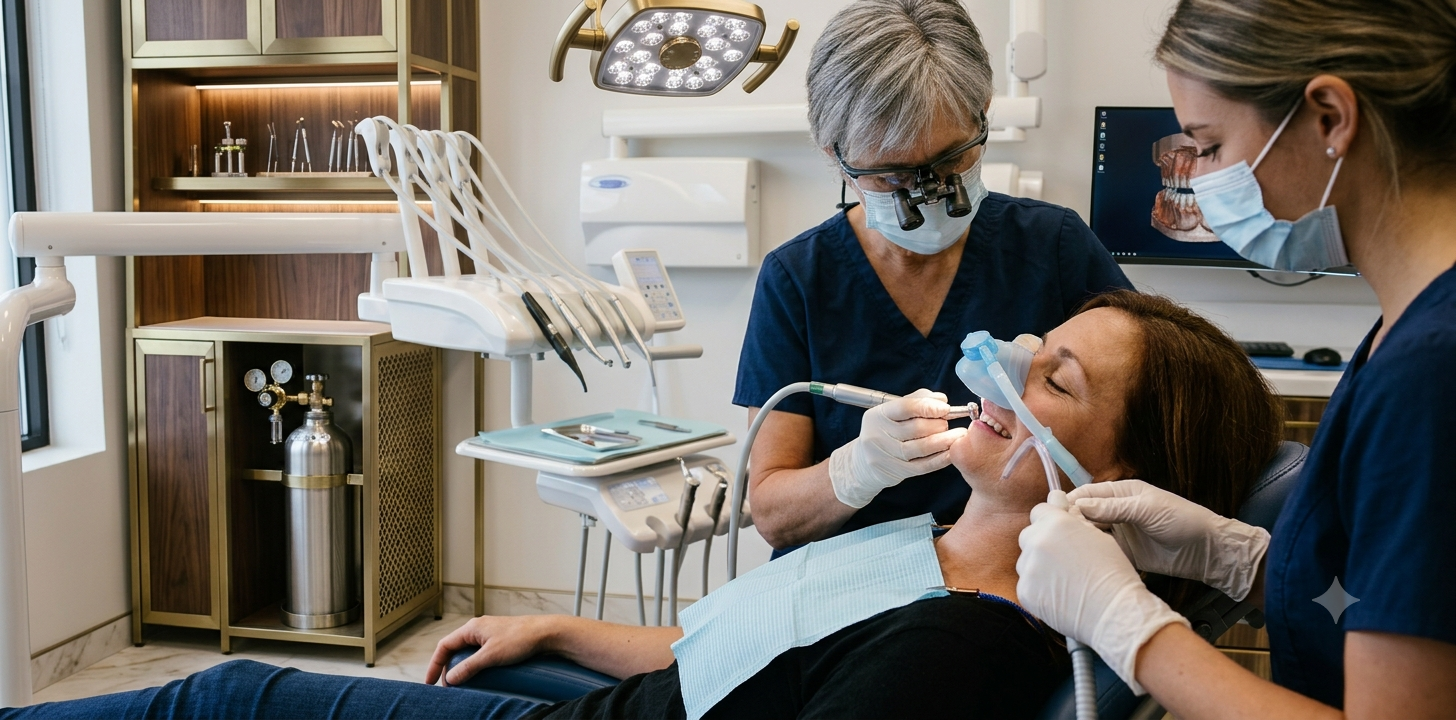
Nitrous oxide, commonly known as laughing gas, is a mild form of sedation administered through a small mask placed over the nose.
It helps patients feel relaxed during dental treatment while generally remaining awake and responsive.
Some benefits include:
- Helps reduce nervousness during treatment
- Works relatively quickly
- Allows patients to remain conscious
- Effects usually wear off quickly after administration
It is commonly used for patients with mild to moderate dental anxiety.
2. Oral Sedation
Oral sedation involves taking prescribed medication before a dental appointment to help reduce anxiety.
Depending on the medication and dosage, patients may feel relaxed, drowsy or less aware of the treatment process.
Some patients remain awake and responsive, while others may have limited memory of the procedure.
Because oral sedation can affect alertness and coordination, patients generally need someone to accompany them home.
3. IV Sedation
Intravenous (IV) sedation involves administering sedative medication through a vein.
It allows the dental team to adjust the level of sedation during the procedure.
Patients may feel deeply relaxed and may remember very little about the treatment afterward.
IV sedation requires appropriate monitoring and should be administered by a qualified professional with the necessary training and equipment.
4. General Anesthesia
General anesthesia produces a state of unconsciousness, meaning the patient is not awake during the procedure.
It may be considered for selected complex dental procedures or patients with specific medical and behavioural needs.
Unlike other sedation methods, general anesthesia requires specialized monitoring and appropriate anesthesia professionals.
Your dental team will determine whether it is suitable based on your medical history and treatment requirements.
How Can Sedation Dentistry Make Dental Treatment More Manageable?
Sedation dentistry can help reduce some of the emotional and physical challenges associated with dental procedures.
Here are some potential benefits:
1. Helps Reduce Dental Anxiety
Sedation can help patients feel calmer before and during treatment.
This may make dental visits easier for individuals who experience nervousness or fear.
2. Improves Comfort During Longer Procedures
Some dental treatments require patients to remain in the dental chair for an extended period.
Sedation may help patients feel more relaxed and tolerate longer appointments more comfortably.
3. Helps Patients With a Strong Gag Reflex
Some individuals experience an involuntary gag reflex during dental procedures.
Depending on the method used, sedation may help reduce the discomfort and anxiety associated with this response.
4. Supports Multiple Dental Treatments
Patients who require several dental procedures may benefit from a treatment plan that combines appropriate sedation with carefully scheduled appointments.
This can make the overall treatment experience more manageable.
5. Helps Patients With Previous Negative Experiences
Individuals who have experienced uncomfortable dental procedures in the past may feel anxious about returning to the dentist.
Sedation, along with clear communication and a supportive dental team, can help create a more comfortable treatment experience.
Who Can Benefit From Sedation Dentistry?
Sedation dentistry may be suitable for adults who:
- Experience moderate to severe dental anxiety.
- Avoid dental visits because of fear.
- Have a strong gag reflex.
- Find it difficult to sit still during treatment.
- Require lengthy or multiple dental procedures.
- Have had difficult dental experiences in the past.
However, sedation is not necessary for every anxious patient.
Your dentist will evaluate your medical history, current medications, anxiety levels and planned treatment before recommending an appropriate option.
Is Sedation Dentistry Safe for Adults?
Sedation dentistry can be performed safely when the appropriate method is selected and proper monitoring is maintained.
However, like any medical procedure involving medication, sedation may carry certain risks.
Possible side effects can include:
- Drowsiness
- Dizziness
- Nausea
- Temporary confusion
- Changes in breathing or blood pressure, depending on the sedation method
Before treatment, inform your dentist about your medical conditions, allergies, medications and any previous reactions to sedation or anesthesia.
Follow all pre-treatment instructions carefully, including guidelines about eating, drinking and arranging transportation when required.
6 Tips to Manage Dental Anxiety Before Your Appointment
Sedation is not the only way to make dental visits easier. Some simple steps can also help reduce nervousness.
- Communicate Your Concerns: Let your dentist know about your fears and previous dental experiences so they can adjust your treatment approach.
- Ask Questions Before Treatment: Understanding the procedure and what to expect can help reduce uncertainty.
- Schedule an Initial Consultation: A consultation without immediate treatment can help you become familiar with the dental environment.
- Practise Relaxation Techniques: Deep breathing and other relaxation exercises may help you feel calmer before your appointment.
- Choose a Comfortable Appointment Time: Schedule your visit when you are less likely to feel rushed or stressed.
- Discuss Sedation Options: If your anxiety is affecting your ability to receive dental care, ask your dentist whether sedation dentistry may be appropriate.
What Should You Discuss With Your Dentist Before Sedation?
Before undergoing sedation dentistry, it is important to share accurate information about your health.
Make sure your dentist knows about:
- Your medical history and existing health conditions.
- All medications and supplements you currently take.
- Any known allergies.
- Previous experiences with sedation or anesthesia.
- Whether you have experienced breathing difficulties during previous procedures.
- Your level of dental anxiety and treatment concerns.
This information helps your dental team select an appropriate sedation method and plan the necessary safety precautions.
Make Your Dental Visits More Comfortable With the Right Care
Dental anxiety should not prevent you from receiving the care you need. While fear and nervousness can make dental visits challenging, sedation dentistry offers options that may help adults feel more relaxed during treatment.
From nitrous oxide and oral sedation to IV sedation and general anesthesia, the appropriate approach depends on your individual needs, medical history and dental procedure.
The first step is to communicate your concerns with your dentist and explore the available options.
Don’t let dental anxiety keep you from a healthy smile. Schedule a dental consultation today and discover a more comfortable approach to dental care!