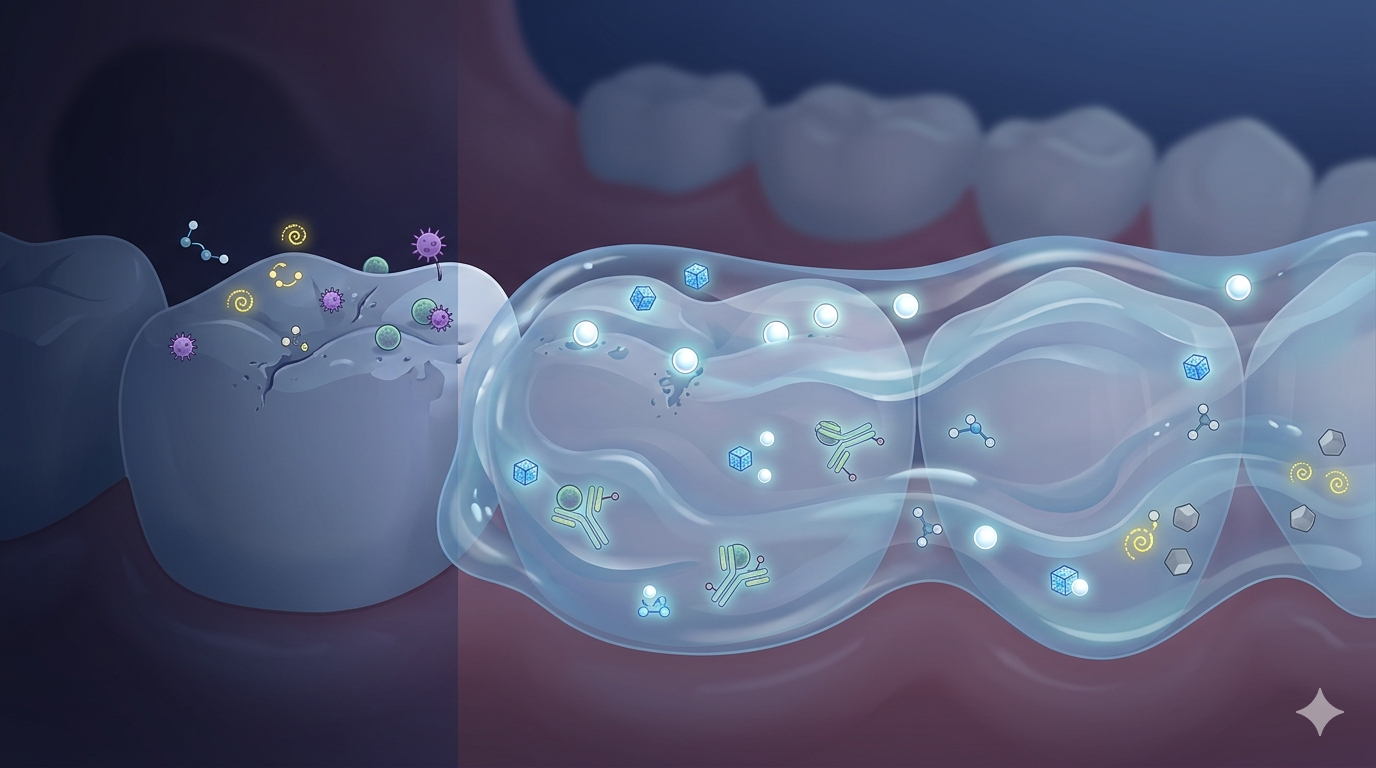
Most people know that brushing and flossing are important for protecting their teeth, but many don’t realize that one of the mouth’s strongest defenses works automatically while they sleep—or rather, stops working as effectively. Saliva plays a crucial role in maintaining oral health, and when saliva production naturally decreases at night, teeth become more vulnerable to damage.
While a reduction in saliva during sleep is completely normal, it can create conditions that allow harmful bacteria, acids, and plaque to have a greater impact on your teeth and gums. Understanding how nighttime saliva changes affect your oral health can help you take steps to protect your smile and reduce the risk of dental problems.
Why Saliva Is So Important
Saliva does much more than simply keep your mouth moist. It serves as one of the body’s natural defense systems against tooth decay and oral disease.
Saliva helps:
- Wash away food particles
- Neutralize harmful acids
- Control bacterial growth
- Protect tooth enamel
- Support digestion
- Provide minerals that help strengthen teeth
Throughout the day, saliva continuously cleanses the mouth and helps maintain a healthy balance of bacteria. Without adequate saliva, the risk of oral health problems increases significantly.
What Happens to Saliva While You Sleep?
During waking hours, saliva production remains relatively active. However, when you fall asleep, your salivary glands slow down considerably.
This natural decrease means:
- Less moisture in the mouth
- Reduced cleansing action
- Increased bacterial activity
- Greater acid exposure
- Slower removal of food debris
As a result, your mouth becomes a more favorable environment for bacteria to multiply throughout the night.
How Bacteria Benefit From Reduced Saliva
The mouth naturally contains millions of bacteria. While many are harmless, some produce acids that can damage tooth enamel.
Normally, saliva helps keep these bacteria under control. At night, however, reduced saliva allows bacteria to remain on tooth surfaces longer.
These bacteria feed on leftover food particles and sugars, producing acids that can:
- Weaken enamel
- Contribute to cavities
- Increase plaque buildup
- Irritate gum tissues
This is one reason why brushing before bed is considered one of the most important oral hygiene habits.
The Link Between Nighttime Dryness and Tooth Decay
Tooth enamel is constantly exposed to acids produced by oral bacteria. Saliva helps neutralize these acids and supports a process known as remineralization, where essential minerals are returned to the enamel.
When saliva levels drop overnight:
- Acid remains on teeth longer
- Enamel receives less protection
- Remineralization slows down
- The risk of decay increases
Over time, repeated acid exposure can contribute to cavity formation and enamel erosion.
Why Morning Breath Happens
Many people wake up with unpleasant breath despite brushing the night before.
Morning breath occurs largely because saliva production decreases during sleep. With less saliva available to wash away bacteria, odor-producing microorganisms can multiply throughout the night.
These bacteria release sulfur compounds that create the characteristic smell often associated with morning breath.
While occasional morning breath is normal, persistent bad breath may indicate additional oral health concerns that should be evaluated by a dentist.
How Dry Mouth Increases the Risk of Gum Problems
Saliva doesn’t only protect teeth—it also helps maintain healthy gums.
When the mouth becomes excessively dry overnight, bacteria can accumulate along the gumline and contribute to inflammation.
Over time, this may increase the risk of:
- Gingivitis
- Gum irritation
- Bleeding gums
- Periodontal disease
- Persistent bad breath
Maintaining proper oral hygiene and staying hydrated can help support healthier gums.
Mouth Breathing Can Make the Problem Worse
Some people experience significantly greater dryness because they breathe through their mouths while sleeping.
Mouth breathing may be caused by:
- Nasal congestion
- Allergies
- Deviated septum
- Sleep apnea
- Chronic sinus issues
Because air continuously moves across the oral tissues, moisture evaporates more quickly, leading to increased dryness and discomfort.
Individuals who frequently wake up with a dry mouth may benefit from discussing the issue with their dentist or healthcare provider.
Sleep Apnea and Nighttime Dry Mouth
Sleep apnea is another condition commonly associated with dry mouth.
People with sleep apnea often breathe through their mouths during sleep or use devices that may contribute to oral dryness. Reduced saliva combined with interrupted sleep can increase the likelihood of oral health concerns.
Common oral symptoms associated with sleep apnea include:
- Dry mouth upon waking
- Bad breath
- Increased cavity risk
- Gum inflammation
- Teeth grinding
Dentists are often among the first healthcare professionals to recognize signs that may suggest sleep-disordered breathing.
How to Protect Your Teeth While You Sleep
Fortunately, several simple habits can help reduce the effects of nighttime saliva reduction.
Brush Before Bed
Removing plaque and food particles before sleep limits the bacteria that remain active overnight.
Floss Daily
Flossing removes debris from areas a toothbrush cannot reach, reducing bacterial food sources during the night.
Stay Hydrated
Drinking water throughout the day helps support healthy saliva production and reduces the likelihood of dehydration-related dry mouth.
Limit Sugary Snacks Before Bed
Consuming sugary foods or beverages before sleep provides bacteria with additional fuel to produce enamel-damaging acids.
Consider a Humidifier
For individuals who experience nighttime dryness, a humidifier may help maintain moisture in the air and reduce oral dryness.
Visit Your Dentist Regularly
Routine dental examinations can identify early signs of dry mouth, enamel erosion, cavities, and gum disease before they become more serious.
Signs You May Have Excessive Dry Mouth
While some saliva reduction during sleep is normal, excessive dryness may require professional evaluation.
Common signs include:
- Frequent dry mouth upon waking
- Difficulty swallowing
- Persistent bad breath
- Increased cavities
- Dry or cracked lips
- Burning sensations in the mouth
Addressing these symptoms early can help protect your long-term oral health.
Your mouth relies heavily on saliva to defend against bacteria, acids, and tooth damage. When saliva production naturally decreases during sleep, teeth and gums become more vulnerable to decay, plaque buildup, bad breath, and inflammation. Although this nightly reduction is normal, maintaining excellent oral hygiene, staying hydrated, and addressing conditions that contribute to dry mouth can help minimize the risks. By understanding the protective role saliva plays, you can take proactive steps to keep your smile healthier while you sleep.